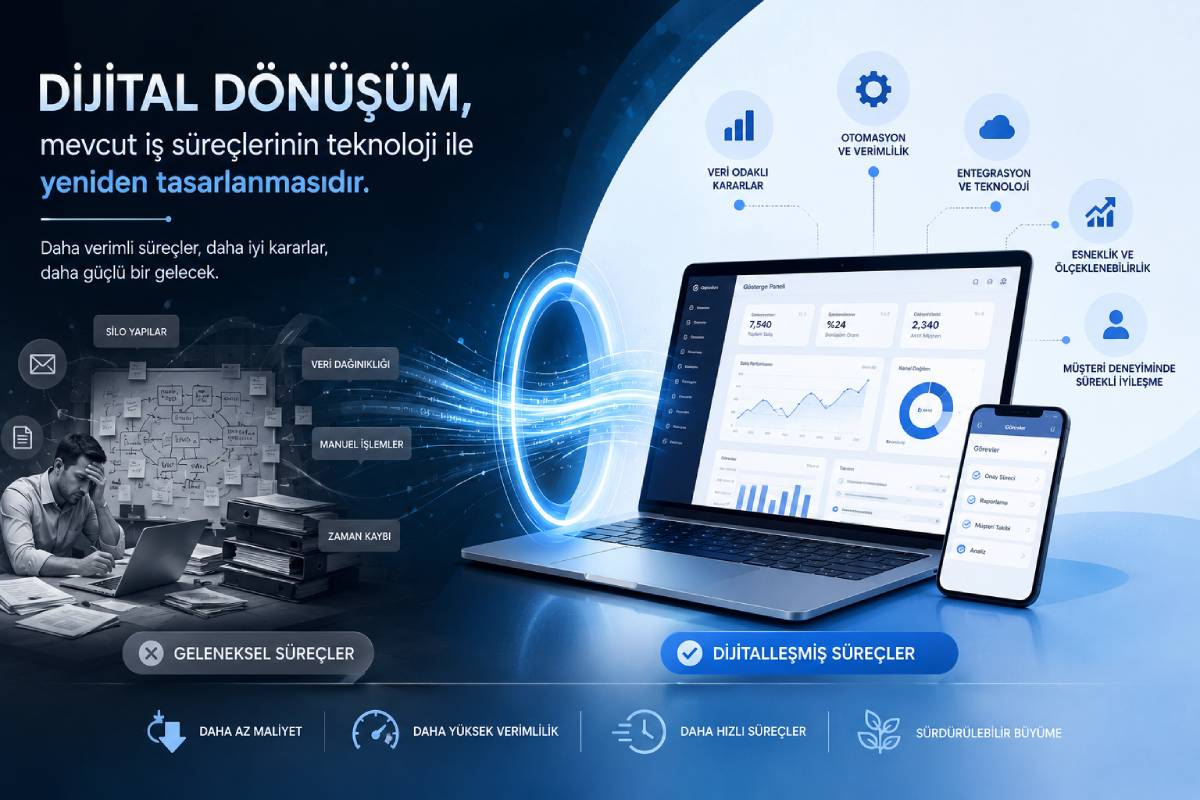
Digital transformation is not just buying new software. When processes are digitalised without being analysed first, old problems simply continue on a new screen. Real efficiency gains come from proper process analysis, automating repetitive work, connecting systems and bringing data into decision-making. In this article we walk through the steps to increase efficiency in digital transformation projects.
What Is Digital Transformation?
Digital transformation is the redesign of existing business processes with technology. The goal is to:
- work faster,
- reduce error rates,
- lower operating costs,
- free up employees for higher-value work.
1. Don't Digitalise Processes Without Measuring Them
The biggest mistake is starting software development without analysing existing problems. The first step should always be to make the current situation visible:
- Process mapping: Document how work flows, step by step and person to person.
- Bottleneck analysis: Identify where the most waiting and errors occur.
- Data flow: Find out where data is created and how often it is re-entered manually.
- User roles: Define who will use the system and with which permissions.
2. Automate Repetitive Work
Tasks done the same way every day offer the quickest wins from automation. For example:
- Sending emails and notifications
- Preparing proposals
- Approval processes
- Generating reports
- Updating CRM records
We show with examples how spreadsheet-driven processes can be automated on our AI and automation page.
3. Connect Your Systems
In many businesses, ERP, CRM, accounting, e-commerce, warehouse and HR systems work in isolation. This leads to the same data being entered again and again, and to inconsistencies. An integrated setup:
- eliminates duplicate data entry,
- reduces errors,
- speeds up information flow between departments.
You can explore solutions that bring separate systems together on one platform on our web applications page.
4. Turn Data into Decisions
Data only creates value when it is used in decisions. With well-designed dashboards you can track the following in real time:
- sales performance,
- customer behaviour,
- operating costs,
- project status.
We cover how this data is used in sales in our article How to Track Leads with CRM Integration.
5. Bring AI into the Process
AI-powered systems deliver significant efficiency gains, especially in high-volume, repetitive knowledge work:
- document and invoice analysis,
- customer support,
- data classification,
- reporting,
- forecasting.
6. Build a Sustainable Foundation
Digital transformation is not a one-off project but an ongoing process. Choosing an infrastructure that is scalable, secure and easy to extend determines your costs in the years ahead. We explain this in detail in our article on sustainability in SaaS applications.
Conclusion
Successful digital transformation projects start not with technology but with the right process design. Measure the process first, then improve efficiency step by step with automation, integration and data. To plan your digital transformation project, get in touch with us.